
When the temperature rises, having reliable cooling is no longer a luxury—it’s a necessity for comfort, productivity, and health. But if you’re looking to upgrade your cooling setup, you’ll face one big decision: should you choose a portable air conditioning unit or a fixed, installed system? Both options have distinct advantages and potential downsides, and what works best for one home or business may not be ideal for another.
As the trusted local experts at John’s Air Conditioning, we’ve helped countless customers across Greater Manchester and the North West find the perfect cooling solution for their needs. In this guide, we break down the key pros and cons of portable and fixed air conditioning systems, helping you make an informed choice that fits your space, budget, and lifestyle.
What Is Portable Air Conditioning?
Portable air conditioning units are self-contained, standalone systems that sit on the floor of a room. They typically feature wheels for easy movement, and a flexible exhaust hose that vents hot air outside through a window, door, or temporary opening. No permanent installation is required—you can set them up and start cooling in minutes.
Pros of Portable Air Conditioning
1. Low Upfront Cost
One of the biggest draws of portable AC units is their affordability. Prices usually range from £200 to £600, making them far cheaper than buying and installing a fixed system. For homeowners on a tight budget or renters who don’t want to invest in permanent upgrades, this is a major advantage.
2. Easy Installation
There’s no need for drilling, ductwork, or professional help. Most units come with all the parts you need to set them up yourself—usually just attaching the exhaust hose and securing it to a window. At John’s Air Conditioning, we often recommend portable units as a quick, hassle-free solution for last-minute heatwaves.
3. Fully Flexible
Portable units let you take cooling exactly where you need it. Cool your bedroom at night, move it to the home office during the day, or place it in the living room when you have guests. You can also take it with you if you move house, making it ideal for tenants and people living in temporary accommodation.
4. No Structural Changes
Since there’s no permanent installation, you won’t have to worry about damaging walls or windows, or getting permission from your landlord. This makes portable air conditioning the go-to choice for rented properties and listed buildings where alterations are restricted.
Cons of Portable Air Conditioning
1. Less Efficient Cooling
Portable units are generally less powerful than fixed systems. Most models can only cool one room at a time, and they struggle to maintain consistent temperatures in spaces larger than 30–40 square metres. They also lose some cooling capacity through the exhaust hose, meaning they use more energy for the same result.
2. Higher Running Costs
While they cost less to buy, portable ACs often have higher long-term energy bills. Their lower efficiency means they work harder to cool a space, pushing up electricity costs over time. For daily use over several months, a fixed system can end up being cheaper to run.
3. Bulky and Noisy
Portable units take up valuable floor space—usually around half a square metre—and their design means they can’t be hidden away. They also produce more noise than fixed systems: most run at 50–65 decibels, similar to a running vacuum cleaner, which can be distracting in quiet rooms or at night.
4. Regular Maintenance Required
You’ll need to empty the built-in water tray regularly as it collects moisture from the air, and clean the filters every few weeks to keep the unit working well. If you forget, the system can become less efficient or even develop mould.
What Is Fixed Air Conditioning?
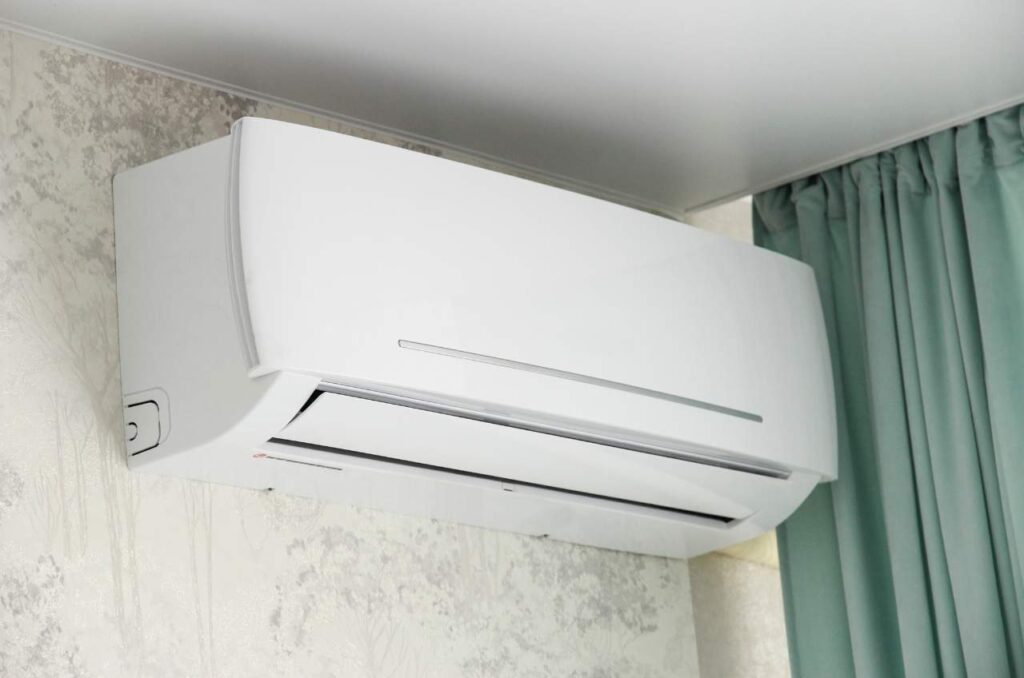
Fixed air conditioning refers to permanently installed systems, including wall-mounted split units, multi-split systems, and ducted central air conditioning. They consist of one or more indoor units mounted high on walls or in ceilings, connected to an outdoor compressor unit via hidden pipes and wiring.
Pros of Fixed Air Conditioning
1. Powerful, Consistent Cooling
Fixed systems are designed to cool reliably and evenly. Even a single split unit will cool a room faster and maintain a steadier temperature than a portable model. Multi-split and ducted systems can cool multiple rooms or your entire home at once, making them perfect for families and larger properties.
2. Lower Long-Term Costs
Modern fixed air conditioning systems are highly energy-efficient. Leading models carry high SEER (Seasonal Energy Efficiency Ratio) ratings, meaning they use far less electricity to deliver the same cooling power. Over 5–10 years, the savings on energy bills often outweigh the initial installation cost.
3. Quiet and Unobtrusive
Indoor units are compact and mounted out of the way, leaving your floor space clear. The loudest part of the system—the compressor—is placed outside, so indoor noise levels usually sit between 20 and 40 decibels, quieter than a library whisper. This makes fixed systems ideal for bedrooms, nurseries, and offices.
4. Added Value and Features
Permanent air conditioning is seen as a valuable upgrade by homebuyers, and can increase your property’s resale or rental value. Most modern systems also include smart features: app control, programmable timers, air purification filters, and the ability to double as heating in winter. At John’s Air Conditioning, we fit systems that work year-round for total comfort.
Cons of Fixed Air Conditioning
1. Higher Initial Investment
Fixed systems cost more upfront. A single split unit usually costs between £1,000 and £2,500 including installation, while whole-house ducted systems can cost £5,000 or more. This puts them out of reach for those looking for a very low-cost quick fix.
2. Professional Installation Required
You’ll need a certified technician to install the system correctly, which adds to the overall cost and means you can’t set it up yourself. Installation usually takes one to three days, and will require minor work like drilling through walls.
3. Permanent Alterations
Once installed, the system stays in place. You can’t